


Everyone says “dynamic pricing.” Few explain what it should do.
Most software treats it as a clock trick. Raise the rate at peak, drop it off-peak. That can help. It does not fix the two things operators care about most: utilization and driver experience. A simple peak or off-peak toggle does not stop someone from occupying a bay after charging. It does not create the premium, reliable experience that earns loyalty.
GO TO-U takes a different view. Every session is by reservation only. Pricing is not a sticker; it is an orchestration tool. It shapes when people come, how long they stay, and how your site earns on every minute.
The result is simple to say and hard to copy: operators earn at least 5x more.
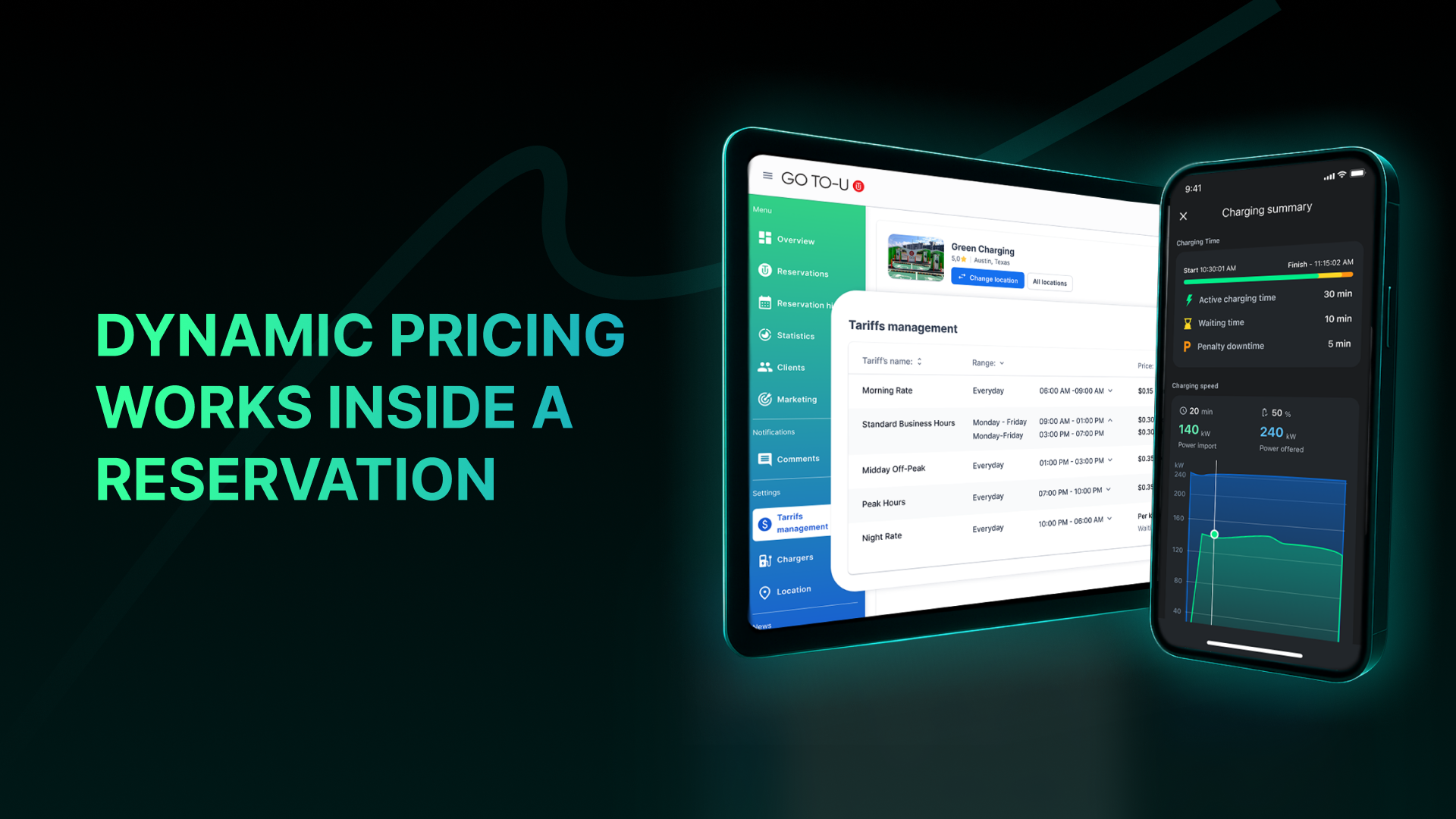
The Logic Behind GO TO-U Pricing
A charging session is not a single lump. It is a process with distinct phases. Each phase has a different value for the site and a different expectation for the driver.
GO TO-U prices the session inside that process. Your rules, your schedule, your access groups. Drivers see clear, predictable receipts. Operators get clean, auditable revenue. Everyone knows what happens next because the session was reserved.
Here is how it works.
1. Multi-Tier Rate Session: The Smart Core
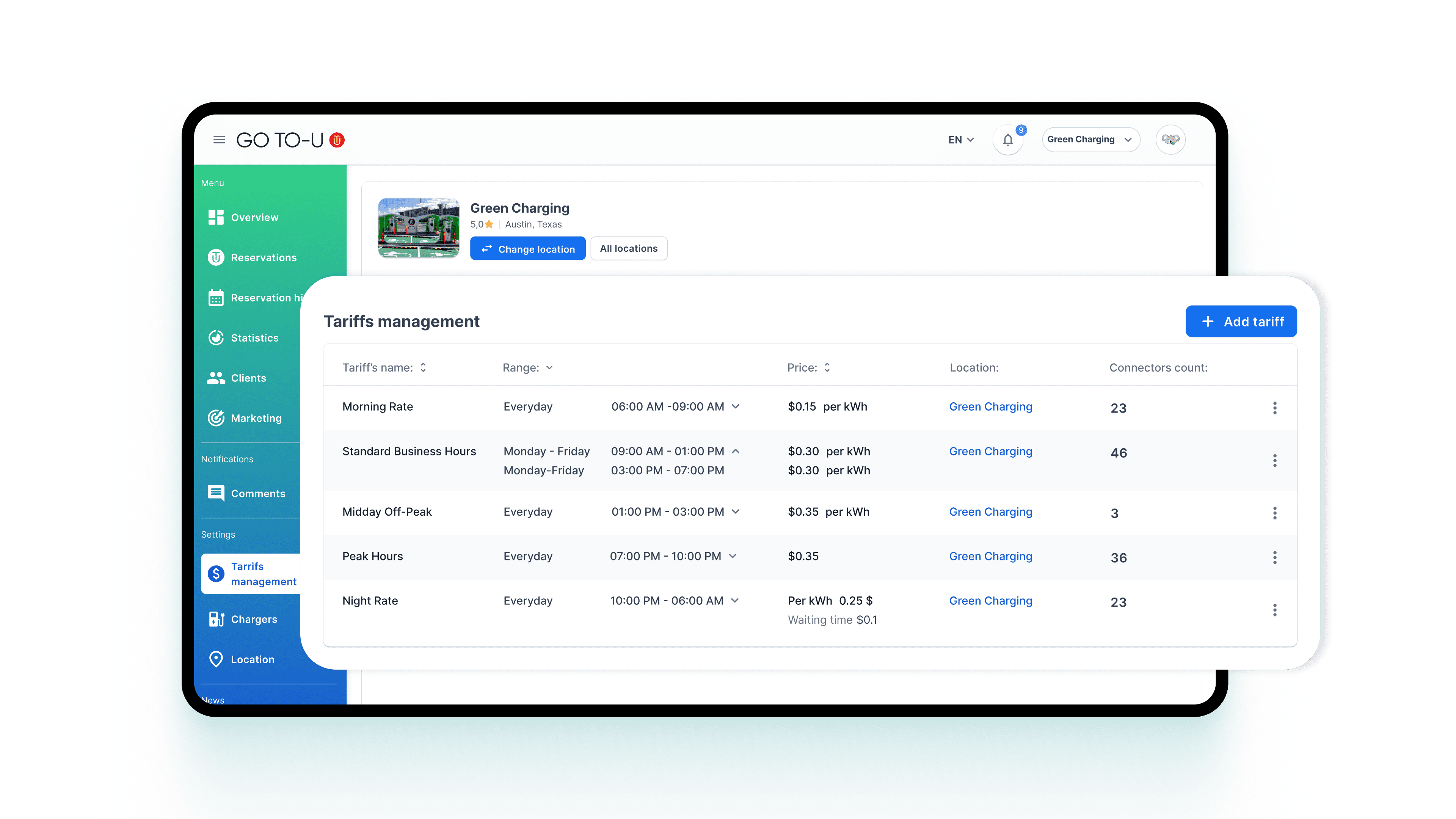
Active charging is the foundation. In GO TO-U it is not one rate for all minutes. You define multiple time bands that reflect real demand and energy dynamics across the day. The platform then prorates inside a single session and applies the correct rate to the correct minutes automatically.
Common bands include:
- Morning Rate for lower demand and off-peak efficiency
- Standard Business Hours for regular daytime activity
- Midday Off-Peak as a short incentive window to balance flow
- Evening Peak when occupancy and grid stress rise
- Night Rate for overnight charging and savings
Here’s how you can configure it in the GO TO-U Back Office
And here is how it looks in the app for EV drivers
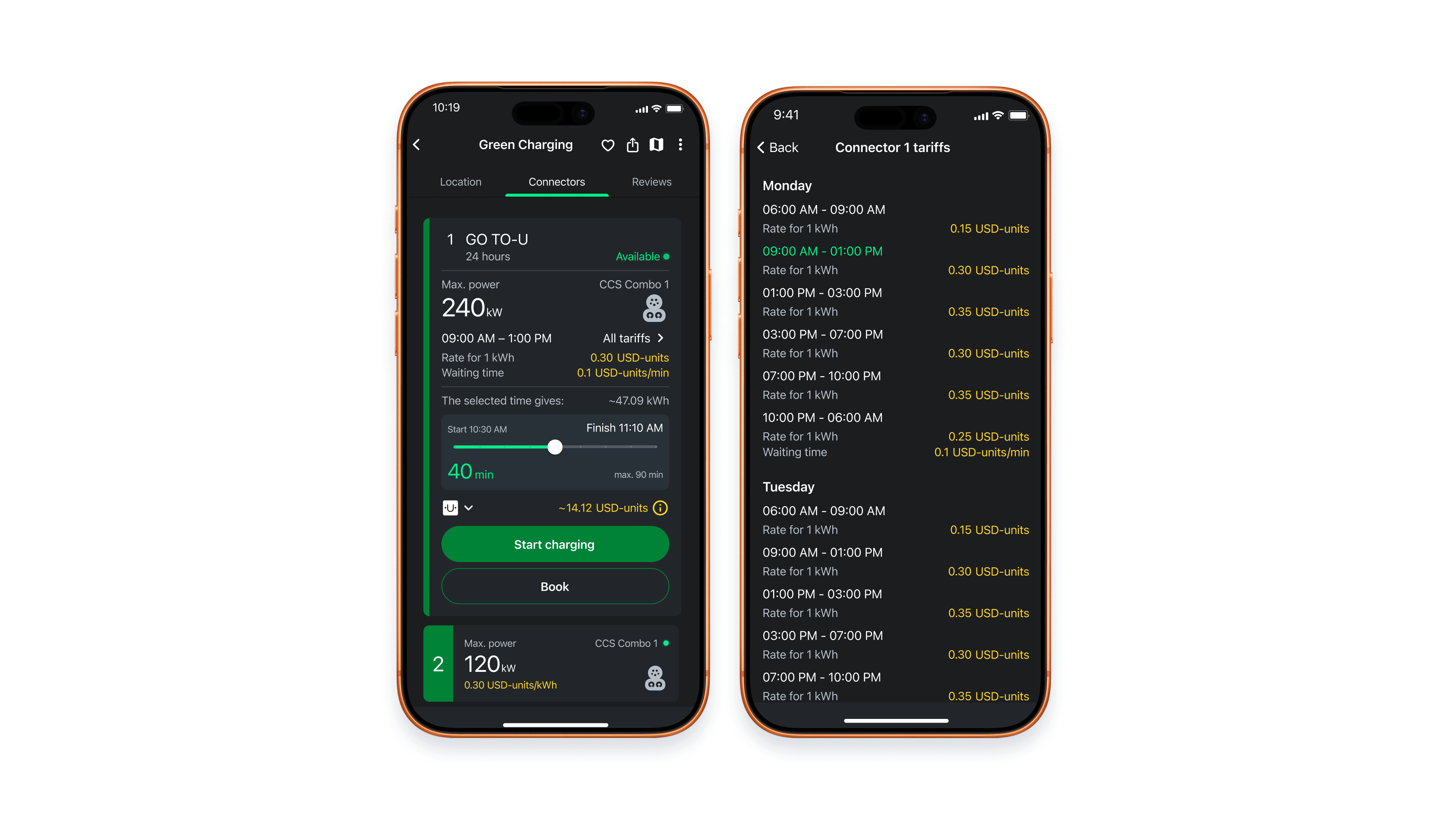
Think of this as a schedule, not a switch. You can create as many bands as you need. Once set, GO TO-U follows them to the minute. No manual adjustments. No end-of-day guesswork.
What the engine actually does
- Live proration when a session crosses bands
- Operator cadence by weekday, weekend, season, and site
- Forecastable estimated cost that preview likely band crossings before booking
- One source of truth for pricing, reservations, and reporting
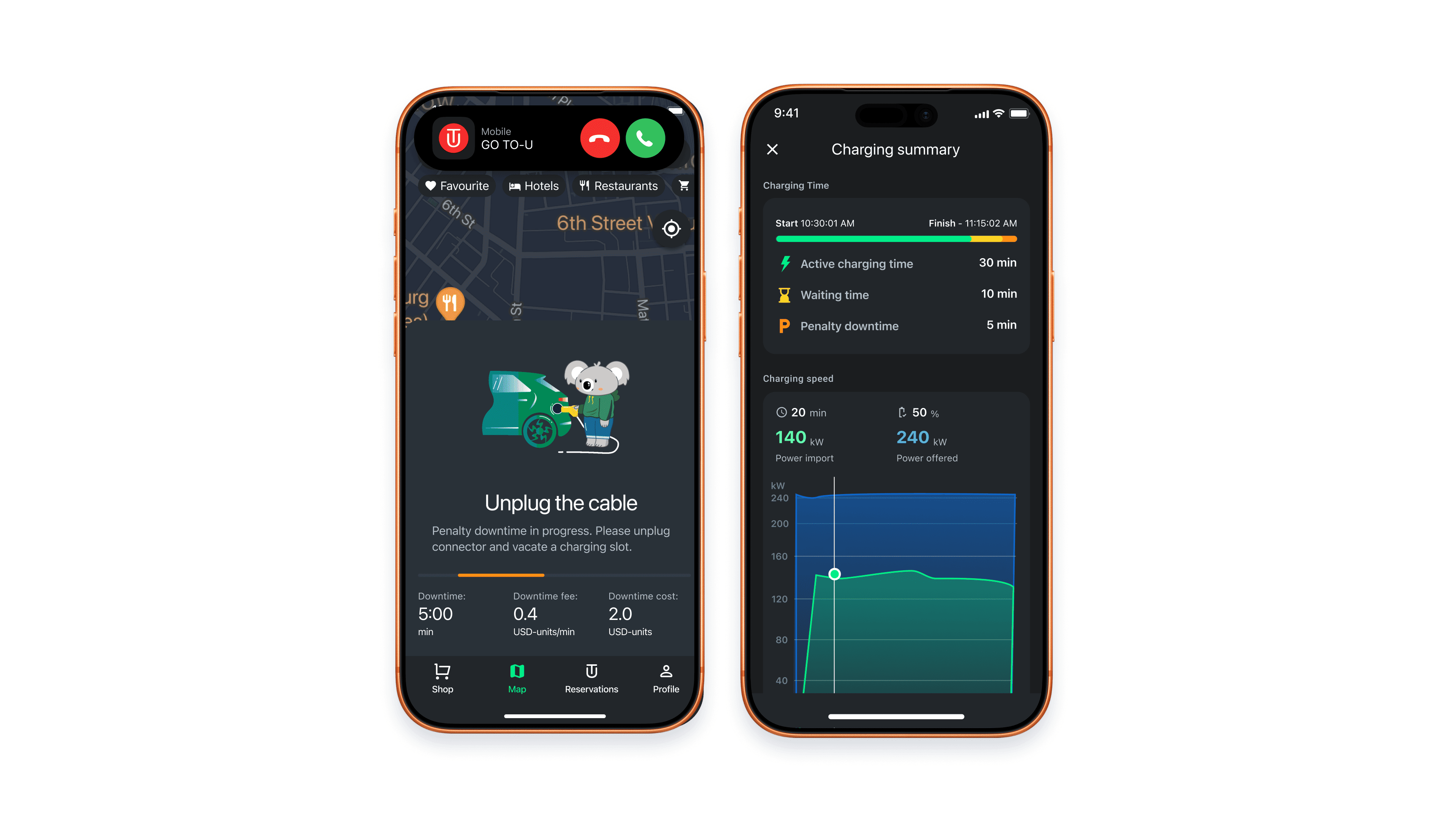
2. Waiting Time: A Planned and Paid Part of the Reservation
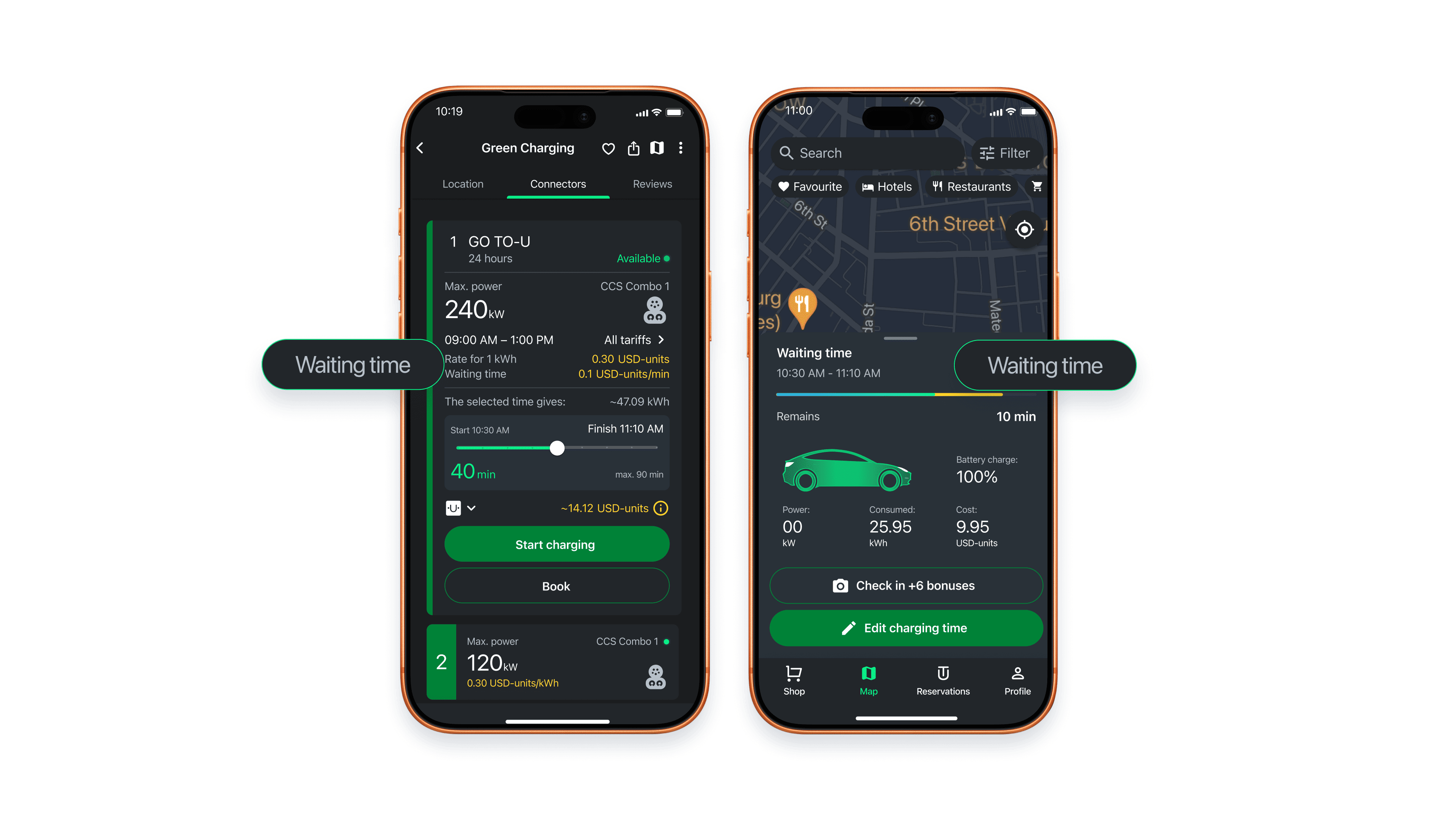
In GO TO-U, drivers plan all on-site time in advance. If someone knows they will be at the mall or hotel for two hours and only one hour is active charging, they book a two-hour slot. The second hour is Waiting time. It is normal, transparent, and fair.
- The car is connected but not drawing energy.
- The bay is intentionally occupied within the reserved window.
- The minutes are paid because they consume a scarce asset.
Waiting time aligns behavior with reality. It keeps schedules honest. It also makes receipts predictable because the expected Waiting time cost is shown up front.
One hard rule applies. When the session ends, the bay must be free for the next reservation.
3. Penalty Downtime: Expensive by Design
If the car remains after the session ends, Penalty downtime begins. It is priced high at $20 per hour or more. The reason is simple. It blocks the next reserved driver and breaks the promise of a reliable schedule.
This is not a gotcha. It protects your service level and your revenue.
4. Access Types Based Tariff Grids: One Site and Many Realities
A single location often serves very different users. GO TO-U lets you create any number of access groups with distinct grids:
- Staff and crew
- Tenants and visitors
- Fleets and public
- VIP and loyalty tiers
- Partners such as hotels, retail, and coworking
Each group can have different time bands, different rates for Active and Waiting time, and different rules by site, connector, or reservation type. You get enterprise control that does not collapse into spreadsheet chaos.
Worked Example: Morning to Standard to Midday Off-Peak
Let the math be obvious.
Reservation: 08:30 to 12:30
Average charging power: 10 kW
Active charging: 08:30 to 12:10 which is 3 hours 40 minutes or 36.67 kWh
Waiting time: 12:10 to 12:30 which is 20 minutes
Penalty downtime: none because the bay is freed on time
Operator time bands and rates for this example:
- Morning Rate from 06:00 to 09:00 at $0.28 per kWh
- Standard Business Hours from 09:00 to 12:00 at $0.38 per kWh
- Midday Off-Peak from 12:00 to 14:00 at $0.30 per kWh
- Waiting time at $0.03 per minute
- Penalty downtime at $20 per hour which is about $0.333 per minute
What the engine calculates automatically:
Active charging with intra-session proration
- 08:30 to 09:00: 0.5 h × 10 kW = 5.00 kWh at $0.28 = $1.40
- 09:00 to 12:00: 3.0 h × 10 kW = 30.00 kWh at $0.38 = $11.40
- 12:00 to 12:10: 0.167 h × 10 kW = 1.67 kWh at $0.30 = $0.50
Waiting time
- 12:10 to 12:30: 20 min at $0.03 = $0.60
Penalty downtime
- none
Total receipt: $1.40 + $11.40 + $0.50 + $0.60 = $13.90
You can model a different stay at any moment. Change the power, duration, or schedule. The engine reruns the proration instantly and shows the expected cost before booking.
Why This Outperforms Simple Peak or Off-Peak
Because it matches how people actually use the site:
- Active charging is priced to the minute across real demand bands.
- Waiting time is planned and paid, not accidental.
- Penalty downtime is a clear deterrent, not a hidden fee.
- Groups see policies that fit their context.
- Reservations align economics with behavior.
For EV drivers, structured dynamic pricing creates predictable behavior: people plan their charging more responsibly, stay within reasonable time windows, and avoid occupying the bay longer than needed. It builds a fair, disciplined environment for everyone using the site.
This set of mechanics is why operators see at least 5X earnings uplift with GO TO-U.
Bottom Line
Dynamic pricing only works inside a reservation model. In GO TO-U, reservations are the core. Pricing is the steering wheel for demand and utilization. By combining intra-session proration, planned Waiting time, firm Penalty downtime, and role-based grids, operators deliver charging that is predictable, profitable, and personal. They also multiply earnings by at least 5x.
When the schedule is respected, the math works. When the math works, the business scales.

By Lena Artemenko
Lena Artemenko is the Co-Founder and Chief Product Officer at GO TO-U, shaping the vision and functionality behind our platform. She’s been working in e-mobility since 2013 and launched her first EV charging infrastructure projects as early as 2014. With a strong background in international business and psychology, Lena designs user-centric solutions based on real-world insights and data. For over a decade, she’s been building technology that makes EV charging not just possible — but seamless, smart, and trusted.