


Charge Point Operators (CPOs) are the backbone of the e-mobility revolution. However, the industry is facing a structural challenge: low utilization, unpredictable occupancy, and limited control over revenue performance.
The EV Charging 1.0 model, based on a first-come, first-served approach, is inherently reactive. It forces drivers to gamble on availability and leaves operators with passive infrastructure that cannot be fully optimized.
Increasing EV charger utilization is not a hardware problem. It is an operating model problem.
GO TO-U delivers EV Charging 2.0. We replace guesswork with reservation-led operations. This is not simply a booking feature. It is a structural shift in how time, energy, and demand are managed and monetized.
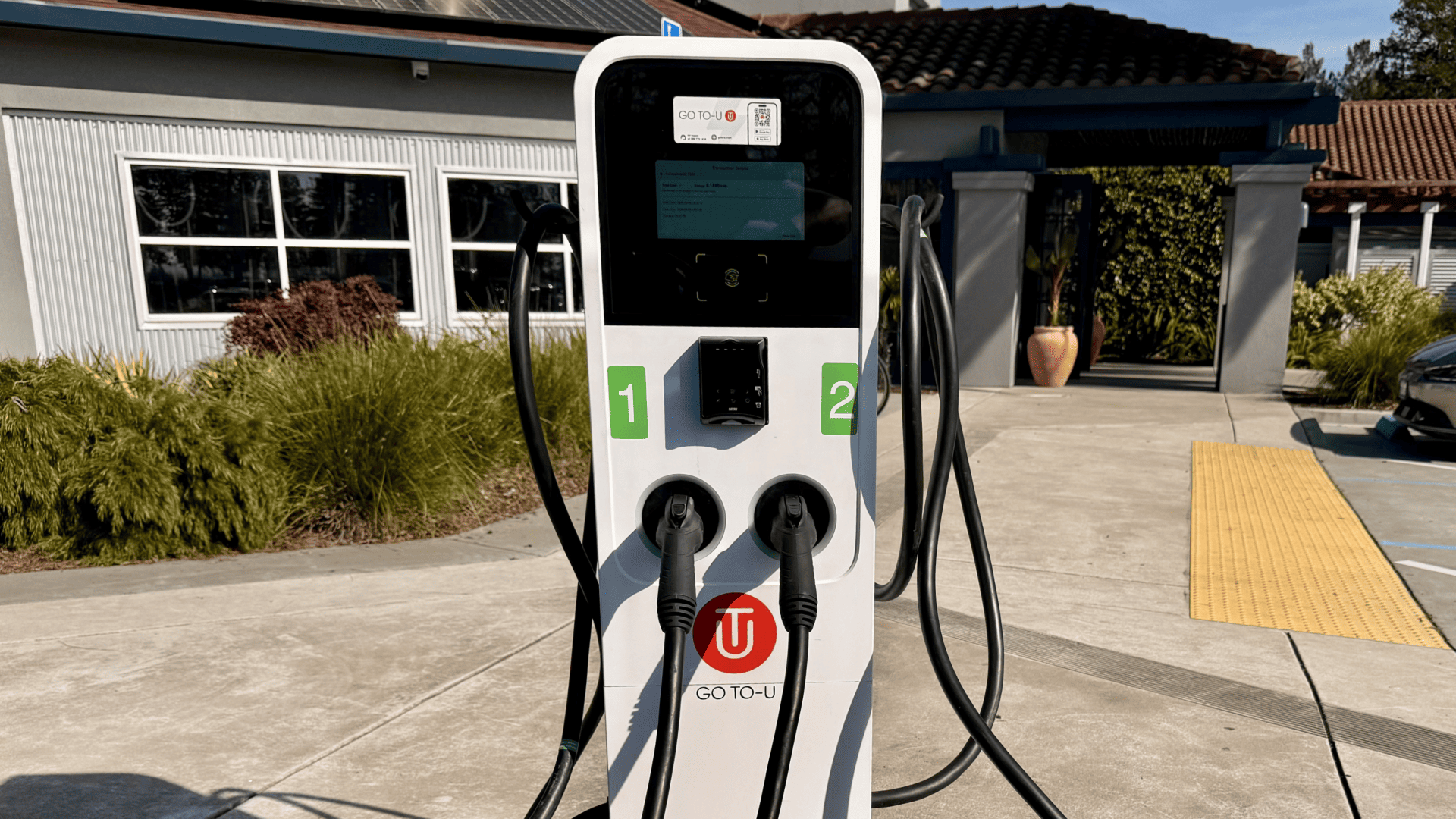
The EV Charging 2.0 Utilization Model
Improving utilization requires a structured approach. High-performing networks consistently rely on five interconnected layers: reliability, demand control, revenue architecture, frictionless access, and capital efficiency.
Each layer strengthens the next. Together, they create predictable throughput and scalable revenue growth.
1. Reliability: The Foundation of Recurring Usage
Globally, 1 in 5 charging sessions fails. Drivers do not return to unreliable stations.
GO TO-U supports a 99.9% uptime standard through continuous monitoring and operational oversight.
With our intuitive system, operators can track station status and occupancy in real time and receive instant push notifications when a charger goes offline or operates abnormally. This real-time visibility shortens response times, enables faster issue resolution, and prevents downtime from turning into lost charging sessions.
Higher reliability leads directly to stronger recurring usage and long-term utilization growth. Without reliability, utilization cannot scale sustainably.
2. Demand Control: Eliminating Idle Time Through Structured Reservations
Traditional charging depends on random arrival. Idle gaps between sessions reduce effective throughput.
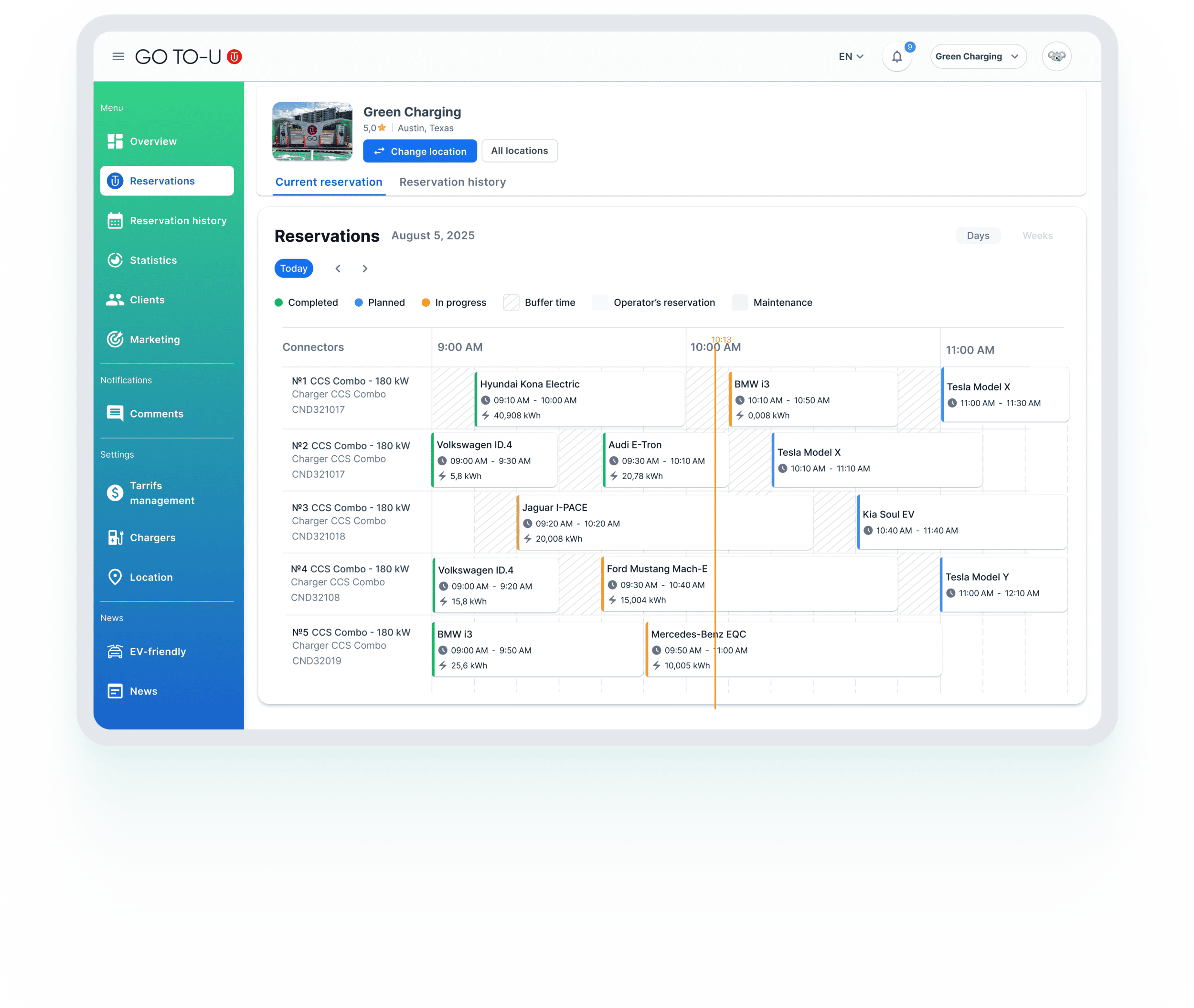
Our Advanced Reservation Technology (ART) restructures this dynamic. While most platforms manage sessions, GO TO-U manages time slots.
By scheduling demand in advance, operators reduce idle time and increase connector utilization. Confirmed reservations create committed revenue rather than uncertain arrival. Structured scheduling ensures predictable turnover between drivers and reduces operational conflicts at the site.
When demand is structured, occupancy becomes controllable rather than accidental. Utilization increases because time is no longer wasted.
3. Revenue Architecture: Reservation-Based Economics
Dynamic pricing alone does not increase utilization unless it influences behavior before the session begins.
GO TO-U integrates pricing into a structured reservation framework where time, energy, and occupancy are planned in advance.
Revenue optimization includes:
- Multi-tier active charging with real proration
- Waiting time planned into every session
- Penalty downtime that protects the next booking
- Role-based tariffs for different user groups
By aligning pricing with scheduled time slots, operators reduce idle loss and improve connector turnover.
Partners operating under this model report up to 5X revenue uplift per connector compared to unmanaged plug-and-play systems. The uplift is driven by structured utilization and controlled throughput, not simply higher tariffs.
4. Frictionless Access: Removing Transaction Barriers
Transaction friction directly impacts usage rates. If payment or access is complicated, utilization declines.
GO TO-U supports:
- In-app and corporate digital wallets
- Credit and debit card payments, including Apple Pay and Google Pay
- QR-based instant access
- Integration with physical POS payment terminals
Removing payment barriers increases successful session completion and encourages repeat usage. Simplified access directly supports higher effective utilization.
5. Demand Activation: Turning Infrastructure into Traffic
Operational control alone does not guarantee traffic. Utilization grows when demand is intentionally activated.
GO TO-U integrates marketing directly into the charging journey, enabling operators to:
- Increase location visibility before arrival
- Communicate targeted offers through push notifications
- Build loyalty through structured incentives
- Enable cross-sell and on-site service promotion
By embedding demand activation into the user experience, charging time becomes engagement time.
Utilization improves when drivers can discover, reserve, and interact with your location before, during, and after each session.
6. Capital Efficiency: Scaling with Predictable ROI
Infrastructure expansion often depends on programs such as CALEVIP and the NEVI Formula Program, which may cover up to 80% of deployment costs.
However, subsidy alone does not guarantee profitability.
Capital performs best when revenue is structured. Combining funding support with reservation-led operations shortens the path to full ROI and reduces exposure to demand volatility.
Case in Point: From Random Arrival to Structured Throughput
A public charging provider sought to increase daily traffic, optimize utilization, and reduce session conflicts.
After implementing GO TO-U’s reservation-led operating system, the network transitioned from unpredictable arrivals to structured demand allocation.
The results included:
- Up to 5X revenue increase per connector
- Reduced downtime
- Elimination of session conflicts
- Increased recurring EV driver traffic
The improvement was driven by operational restructuring rather than tariff adjustments.
Conclusion: Utilization Is Engineered, Not Accidental
Improving EV charger utilization requires more than installing additional hardware or adjusting pricing.
It requires control over reliability, demand scheduling, revenue structure, access simplicity, and capital deployment.
First-come, first-served charging limits scalability. Reservation-led orchestration enables predictable utilization, revenue stability, and long-term network growth.
EV Charging 2.0 provides the operational structure required to scale.
For strategic consultation: contact@goto-u.com