


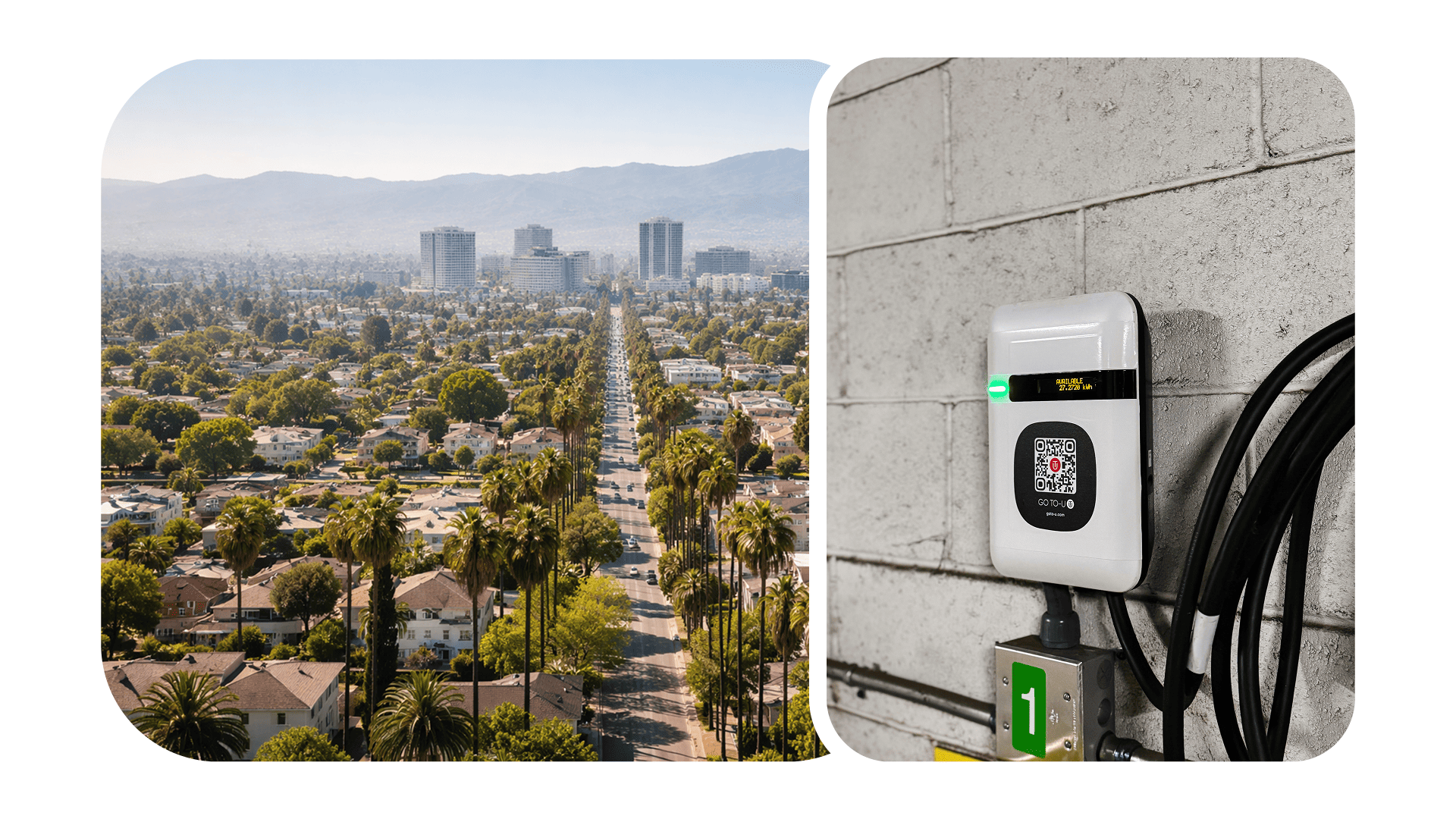
In a premier North Hollywood multifamily community, a troubling trend emerged: residents were leaving the property to use public fast chargers because their own on-site amenity was too expensive and too unreliable.
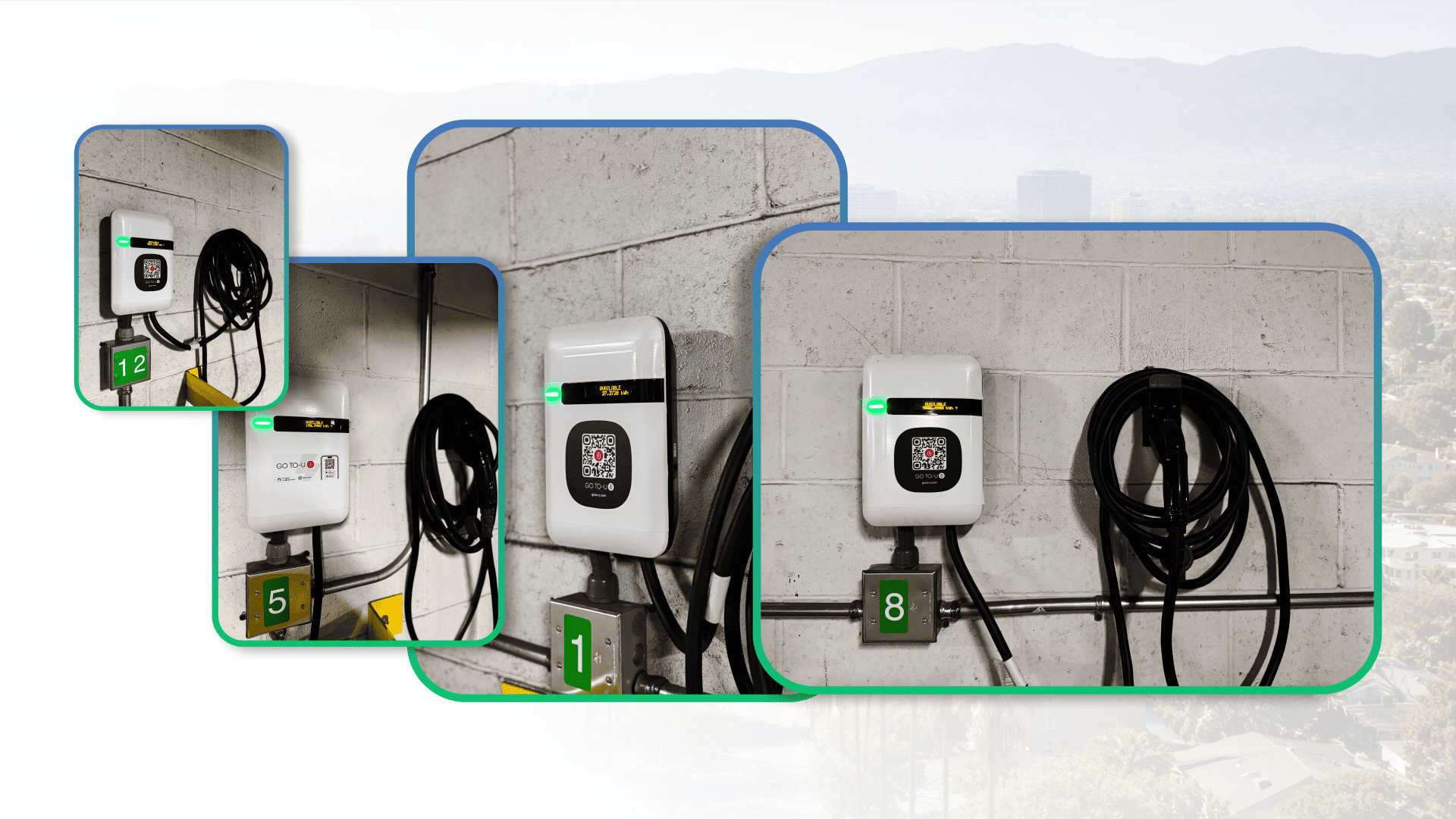
The property had the hardware 20 operational AC chargers but they were running on EV Charging 1.0 logic. This model created a chaotic, first-come-first-served environment where access was unpredictable and high operational overhead drove prices to $0.60+ per kWh.
The infrastructure was not the problem. The operating system was.
The Challenge
Inflated сosts.
Residents were paying $0.60+ per kWh plus activation fees. Charging at home had become more expensive than stopping at a public fast charger, a daily signal to residents that the building was not set up for the way they actually live.
The experience was unpredictable.
The system operated on a first-come, first-served basis. Residents had no way to reserve a session, plan around their schedule, or know whether a charger would be free when they needed it. For anyone who depends on their vehicle every morning, that uncertainty quietly erodes confidence in the property. And once that confidence is lost, it is very difficult to rebuild.
Installing chargers is not enough. How they are managed defines the resident experience – and the resident experience defines retention.
The Solution
The property bypassed a costly hardware overhaul by implementing a software-only migration to the GO TO-U platform. In just 1 hour, the entire 20-station network was upgraded from a reactive utility to a proactive service powered by Advanced Reservation Technology (ART) – with zero downtime and no disruption for residents.
GO TO-U replaced the fragmented, first-come-first-served model (EV Charging 1.0) with structured, reservation-based charging orchestration (EV Charging 2.0). Residents now book sessions in advance. Access is guaranteed. Pricing is transparent. And the operating logic that caused the problem was replaced entirely – without touching a single charger.
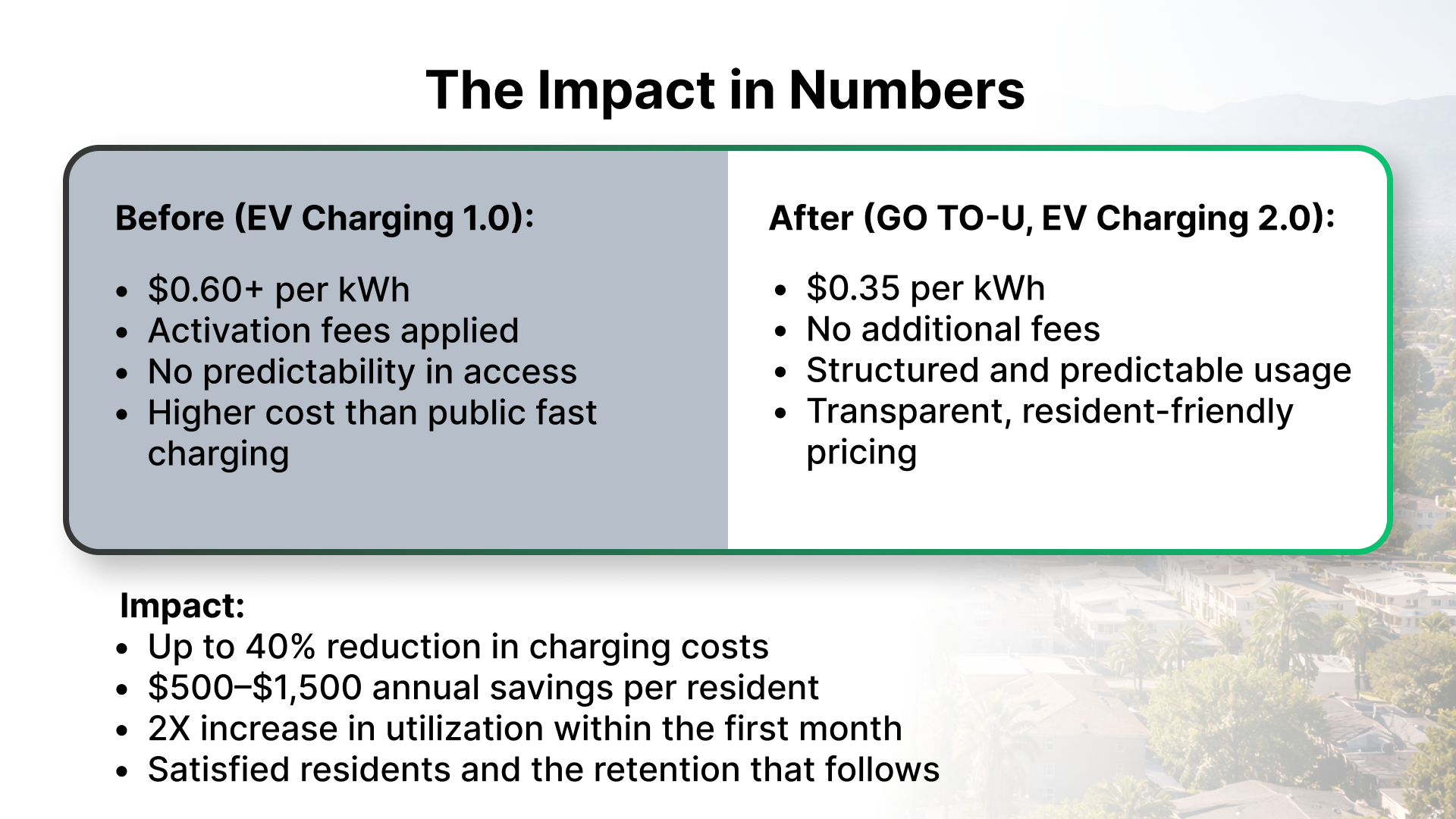
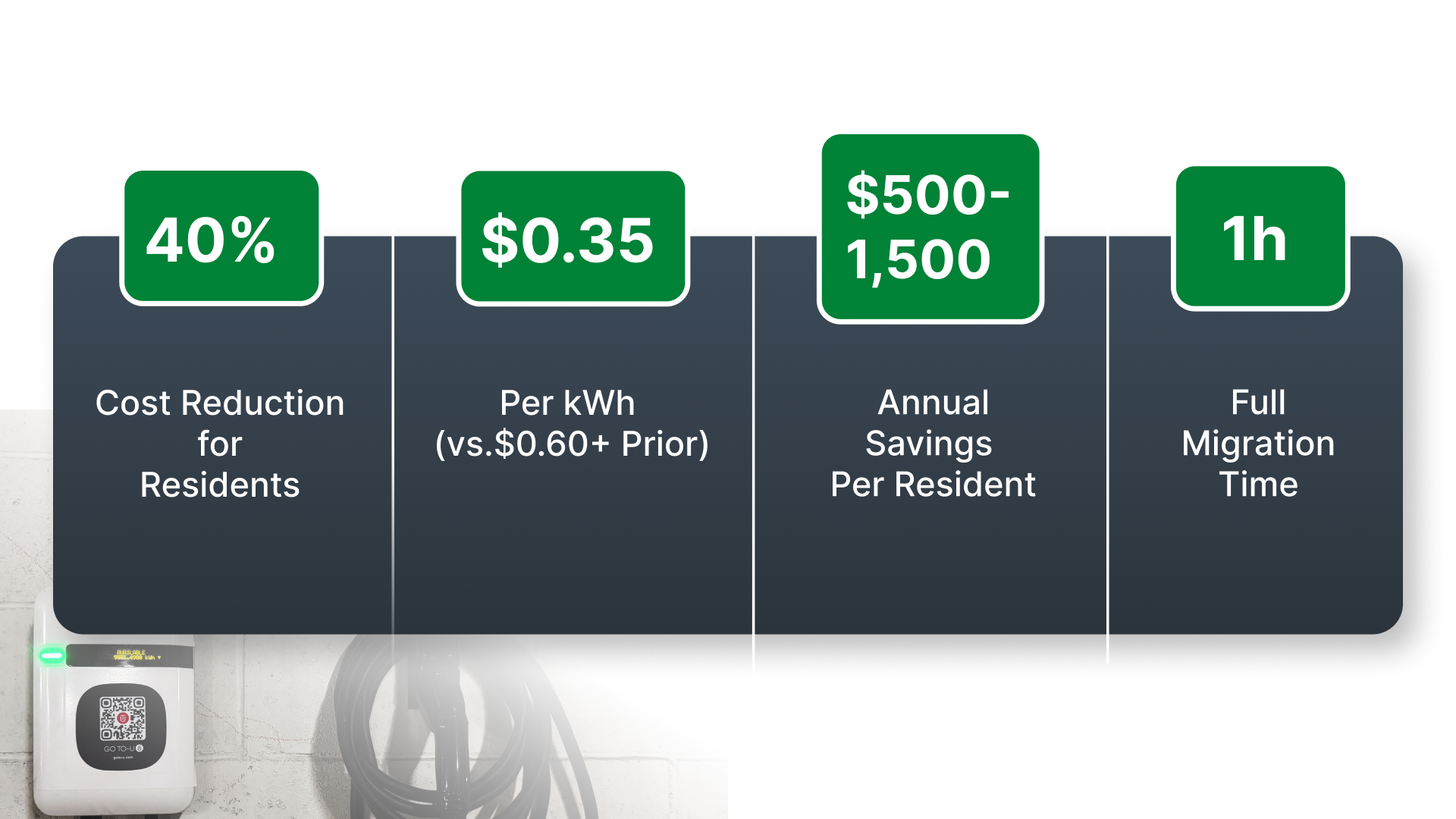
"Infrastructure alone does not create value – the operating logic behind it does. By simply changing the software layer, we proved that you do not need more copper and more chargers. You need more intelligence. We reduced costs by 40% and treated charging as a logistics problem, not just a plug in the wall." – Nazar Davyda, Co-Founder & CEO, GO TO-U
What Residents Gained
-
Guaranteed access to charging
Residents can reserve charging sessions in advance, eliminating uncertainty and competition for availability, powered by ART -
Simple and flexible payments
Seamless payment experience through the GO TO-U app, including Apple Pay and Google Pay -
Transparent pricing model
No activation fees or hidden costs – residents pay only for actual energy consumed
What Property Management Gained
-
Optimized cost structure
Elimination of unnecessary platform-related expenses -
Real-time monitoring and reliability
24/7 system visibility with instant alerts if any station goes offline -
Full operational transparency
Access to OCPP logs, session data, and performance insights -
Reduced operational workload
AI-driven automation stabilizes performance and minimizes manual intervention
Conclusion
This case makes one thing clear: the chargers were never the problem. The system running them was.
A single software migration completed in 1 hour, at zero hardware cost delivered two outcomes that compound each other: residents save up to 40% on every session, and they charge at home on their own schedule, without hassle, without anxiety, every single time.
No hassle. No anxiety. Charge at home like it should be.
This is what EV charging should look like in modern multifamily communities.
Is your building still running on an outdated charging model?
If your residents are paying more than $0.50 per kWh or facing inconsistent access, the issue is not your chargers – it is your operating system.
GO TO-U enables a fast, seamless transition to a more efficient model with no hardware replacement required.
Contact us at contact@goto-u.com for a 24-hour system audit.